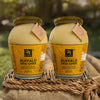
Understanding A2 Milk and A2 Ghee: Complete Guide
You've probably seen the label: "A2 milk" or "A2 ghee."
Maybe you've noticed these products commanding premium prices—sometimes 30-50% more than regular dairy.
You might have heard claims about easier digestion, better tolerance, or returning to "ancestral" dairy.
But what does "A2" actually mean? Is it marketing hype, or is there genuine substance behind the distinction?
This guide cuts through the confusion. We'll explain what A2 milk is, how it differs from regular milk, why it matters for ghee, and help you decide whether A2 products are worth seeking out.
What is A2 Milk? The Basic Science
To understand A2 milk, we need to start with milk protein—specifically, a protein called beta-casein.
Milk Protein Composition
Cow and buffalo milk contains approximately 3-4% protein, which includes:
- Whey proteins (20%)
- Casein proteins (80%)
Casein itself comes in several forms, with beta-casein making up about 30% of the total protein.
The A1 and A2 Variants
Beta-casein exists in different genetic variants, the two most common being:
- A1 beta-casein
- A2 beta-casein
The structural difference:
These variants differ by a single amino acid at position 67 in the protein chain:
- A2 beta-casein: Has proline at position 67
- A1 beta-casein: Has histidine at position 67
This seemingly tiny difference—one amino acid out of 209—creates different properties during digestion.
How A1 and A2 Are Digested
During digestion:
A2 beta-casein (with proline at position 67):
- The proline creates a strong bond
- Protein remains largely intact during digestion
- Breaks down into standard amino acids
A1 beta-casein (with histidine at position 67):
- The histidine creates a weaker bond
- During digestion, a peptide fragment can be released
- This fragment is called beta-casomorphin-7 (BCM-7)
BCM-7 is a bioactive peptide—meaning it can interact with the body's systems. This is where the A1 vs. A2 distinction becomes relevant.
Where Did A1 and A2 Come From?
Evolutionary perspective:
Originally, all cattle produced A2 beta-casein—this was the ancestral form. A genetic mutation thousands of years ago created the A1 variant.
Geographic distribution:
A2 milk predominantly from:
- Indigenous cattle breeds in Africa, Asia
- Traditional European breeds (Jersey, Guernsey to some extent)
- Buffalo (naturally produce only A2)
- Goats and sheep (naturally produce A2-like beta-casein)
A1 milk predominantly from:
- Modern Holstein-Friesian cattle (most common commercial dairy breed)
- Many crossbred cattle
- Modern high-yield commercial dairy herds
What happened: As commercial dairy farming expanded globally, Holstein-Friesian cattle (which produce large quantities of milk containing A1 beta-casein) became dominant. Today, most commercial milk contains both A1 and A2 beta-casein.
A1 vs A2: What's the Actual Difference?
Let's examine what we know—and what we don't—about these two types.
The Digestion Difference
Reported experiences (anecdotal):
Many people report different experiences with A1 vs. A2 milk:
- Some find A2 milk easier to digest
- Others report less bloating or discomfort
- Some notice no difference at all
Important context: Individual responses vary widely. What affects one person may not affect another.
The Research Landscape
Research on A1 vs. A2 milk is ongoing and evolving.
What studies have explored:
- Digestive comfort in people consuming A1 vs. A2 milk
- BCM-7 levels and their potential effects
- Differences in tolerance among various populations
Current scientific consensus:
- The structural difference between A1 and A2 is well-established
- BCM-7 is produced from A1 beta-casein during digestion
- Individual responses to A1 vs. A2 appear to vary
- More research is needed for definitive conclusions
What we don't claim: We don't make therapeutic or health claims about A2 milk or ghee. Research is ongoing, and individual responses differ significantly.
Lactose Intolerance vs. Milk Protein Sensitivity
Important distinction:
Lactose intolerance:
- Inability to digest lactose (milk sugar)
- Caused by lack of lactase enzyme
- Symptoms: bloating, gas, diarrhea after consuming dairy
- Not related to A1 or A2 beta-casein
Milk protein sensitivity:
- Reaction to milk proteins (casein or whey)
- Different mechanism than lactose intolerance
- Some people report better tolerance of A2 milk
- Individual experiences vary widely
A2 milk still contains lactose. If you're lactose intolerant, A2 milk won't necessarily help unless it's also lactose-free.
A2 ghee, however, contains minimal lactose (removed during clarification), which is why many lactose-intolerant individuals can consume ghee regardless of whether it's A1 or A2.
Which Animals Naturally Produce A2 Milk?
Understanding animal genetics helps explain pricing and availability.
Buffalo: Naturally A2
All buffalo breeds produce A2 milk naturally.
This includes:
- Murrah buffalo
- Mehsana buffalo
- Jaffarabadi buffalo
- Nili-Ravi buffalo
- All other buffalo breeds worldwide
Why this matters: If you buy buffalo ghee from any source, it's automatically A2. You don't need special designation or premium pricing for this feature—it's inherent to buffalo milk.
Indigenous Cow Breeds: Primarily A2
Traditional Indian cow breeds that produce predominantly A2 milk:
- Gir
- Sahiwal
- Red Sindhi
- Rathi
- Tharparkar
- Kankrej
- Ongole
- Hariana
Traditional European breeds:
- Jersey (mostly A2, some A1)
- Guernsey (mostly A2)
- Brown Swiss (mixed)
These breeds evolved before the A1 mutation became widespread in commercial dairy cattle.
Modern Commercial Breeds: Primarily A1/A2 Mixed
Breeds that commonly produce A1 beta-casein:
- Holstein-Friesian (most common commercial dairy breed worldwide)
- Crossbred cattle (indigenous × Holstein)
- Modern high-yield commercial cattle
These animals typically produce milk containing both A1 and A2 beta-casein in varying ratios.
How Breed Affects Ghee Labeling
Buffalo ghee:
- Always A2 (buffalo naturally produce A2)
- No need for special "A2" designation
- Be wary of buffalo ghee priced at extreme premium for "A2" designation—it's redundant
Cow ghee:
- May be A1/A2 mixed (from commercial breeds)
- May be pure A2 (from indigenous or selected breeds)
- "A2 cow ghee" designation indicates pure A2 from selected cows
- Legitimate premium pricing reflects sourcing from specific breeds
A2 Ghee: What Makes It Different?
Now let's focus specifically on ghee made from A2 milk.
Does the Clarification Process Change A1/A2 Status?
Important question: If ghee removes most milk proteins, does the A1/A2 distinction even matter?
The answer is nuanced:
What clarification removes:
- Most casein protein (80-90%+)
- Most whey protein (90%+)
- Most lactose
What may remain in trace amounts:
- Small quantities of milk proteins
- The exact amount depends on how thoroughly ghee is clarified
Traditional Bilona ghee (properly made) removes nearly all protein through:
- Fermentation (which breaks down some proteins)
- Slow cooking (which separates proteins as milk solids)
- Thorough filtering (which removes separated solids)
The practical implication: Properly made ghee contains so little protein that the A1/A2 distinction becomes less significant than in liquid milk.
However: Some people who are sensitive to milk proteins still prefer A2 ghee, reporting better experiences. Individual responses vary.
When A2 Designation Matters for Ghee
A2 ghee may be relevant for:
People who are sensitive to milk proteins (not lactose)
- Those who notice differences between regular and A2 milk
- Individuals seeking to avoid BCM-7 entirely
- Anyone who prefers A2 for philosophical or dietary reasons
A2 ghee is less relevant for:
- Lactose-intolerant individuals (properly made ghee is low-lactose regardless)
- Those with no milk protein sensitivity
- Anyone primarily concerned with ghee quality, sourcing, and processing method
Priority hierarchy for choosing ghee:
- Purity (no adulteration)
- Processing method (Bilona vs. industrial)
- Animal diet (grass-fed vs. grain-fed)
- Source transparency (known origin vs. unknown)
- A1 vs. A2 (relevant for some, not critical for others)
Quality and processing method generally matter more than A2 designation alone.
The Economics of A2: Why the Premium Price?
A2 milk and ghee cost more. Let's understand why.
Production Costs
For A2 cow milk/ghee:
Breed selection:
- Requires maintaining or sourcing indigenous breeds
- These breeds typically produce less milk than commercial Holstein
- Lower yield = higher per-liter cost
Genetic testing:
- Confirming A2 status requires DNA testing
- Each animal must be tested
- Adds cost to production
Separate processing:
- A2 milk must be kept separate from regular milk
- Requires dedicated processing facilities or batches
- Cannot mix herds
- Increases operational complexity
Smaller scale:
- A2 production is inherently smaller scale
- Less economies of scale
- Higher per-unit costs
For buffalo milk/ghee:
- Buffalo naturally produce A2
- No genetic testing needed
- No special sourcing required
- Premium pricing for "A2 buffalo ghee" is questionable since all buffalo ghee is A2
Market Pricing Reality Check
Typical market prices (India):
Cow Ghee:
- Regular cow ghee (commercial breeds): ₹600-900/liter
- A2 cow ghee (indigenous breeds): ₹1,500-2,500/liter
Buffalo Ghee:
- Regular buffalo ghee: ₹800-1,200/liter
- "A2" buffalo ghee: Sometimes ₹1,500-2,000/liter
Important note: Since all buffalo ghee is naturally A2, paying a significant premium specifically for "A2 buffalo ghee" may not be justified. You're paying for buffalo ghee quality, not for a special A2 feature.
What You're Actually Paying For
Legitimate reasons for A2 premium pricing:
✓ Maintaining indigenous breeds (lower yield) ✓ Genetic testing and verification ✓ Smaller-scale, artisanal production ✓ Transparent sourcing and traceability ✓ Traditional processing methods ✓ Higher quality control standards
Red flags:
✗ "A2" buffalo ghee priced far above regular buffalo ghee (it's redundant) ✗ No information about breed or sourcing ✗ "A2" designation with industrial processing ✗ Vague claims without substantiation ✗ No transparency about testing or verification
Should You Choose A2 Ghee?
Let's help you make an informed decision.
Choose A2 Cow Ghee If:
✓ You've noticed you tolerate A2 milk better than regular milk ✓ You have milk protein sensitivity (not just lactose intolerance) ✓ You prefer supporting indigenous cattle breeds ✓ You value traditional animal husbandry practices ✓ You want to minimize exposure to BCM-7 ✓ You can verify the authenticity of the A2 claim
A2 Status May Matter Less If:
○ You're only lactose intolerant (properly made ghee is low-lactose anyway) ○ You've had no issues with regular ghee previously ○ You're primarily concerned with ghee purity and processing ○ Your priority is grass-fed over genetic variant ○ Budget is a significant constraint
For Buffalo Ghee:
Simple truth: All buffalo ghee is A2. Focus on:
- Processing method (Bilona vs. industrial)
- Purity (no adulteration)
- Animal diet (grass-fed vs. grain-fed)
- Source transparency
Don't pay a significant premium just for "A2" labeling on buffalo ghee—it's inherent to the product.
How to Verify Authentic A2 Ghee
With premium pricing comes the risk of false claims. Here's how to verify authenticity.
Questions to Ask Producers
1. What breed of cattle do you source from?
- Legitimate A2 producers can name specific indigenous breeds
- Vague answers are red flags
2. How do you verify A2 status?
- Genetic testing is the only definitive method
- Ask about testing protocols
- Request test certificates if available
3. Is your entire herd A2, or do you separate?
- Some producers maintain entirely A2 herds
- Others separate A2 cows from mixed herds
- Both are legitimate if done properly
4. For buffalo ghee: Why the A2 premium?
- If they're charging extra specifically for "A2" buffalo ghee, question it
- Buffalo ghee is naturally A2
- Premium should reflect quality, not redundant designation
Documentation and Transparency
Legitimate A2 ghee producers typically provide:
✓ Breed information (specific indigenous breeds named) ✓ Sourcing location (specific region or farms) ✓ Testing information (lab reports available on request) ✓ Processing details (Bilona method, clarification process) ✓ Batch traceability (can trace product to source)
Red flags:
✗ No breed information provided ✗ Vague sourcing ("various farms") ✗ No mention of testing or verification ✗ Refusal to answer direct questions ✗ Extreme claims about benefits
Price as an Indicator
If A2 cow ghee is priced same as regular cow ghee:
- Likely not genuine A2 (indigenous breeds cost more to source)
- May be mislabeled
- Economics don't support claim
If buffalo ghee has massive A2 premium:
- Question what you're paying for
- A2 is natural to buffalo
- Premium should reflect other quality factors
Sweet spot: Pricing that reflects actual production costs—higher than commercial, but reasonable and explainable.
A2 Ghee in Traditional Indian Context
It's worth noting: the A1/A2 distinction is relatively modern in popular awareness.
Historical Perspective
Traditional Indian dairy:
- Used indigenous cattle and buffalo breeds
- All production was naturally A2
- No need for designation—it was the only option
Modern commercial dairy:
- Introduced high-yield commercial breeds (often A1-producing)
- Crossbreeding created mixed herds
- A2 designation became necessary to identify original milk type
In essence: A2 milk is not new or innovative—it's a return to what traditional dairy always was.
The Bilona Connection
Authentic Bilona ghee traditionally came from:
- Indigenous buffalo (naturally A2)
- Indigenous cows (naturally A2)
- Village-level production
- Traditional animal husbandry
When you choose traditional Bilona ghee from indigenous animals, you're automatically getting A2 without needing special designation.
This is why focusing on processing method (Bilona) and animal sourcing (indigenous, grass-fed) often matters more than specifically seeking "A2" labels.
Beyond A2: Other Factors That Matter
While A2 is one consideration, other factors significantly impact ghee quality.
Factor 1: Animal Diet
Grass-fed vs. grain-fed affects:
- Omega-3 fatty acid content (grass-fed has more)
- CLA levels (grass-fed has 3-5x more)
- Vitamin content (grass-fed has more K2, beta-carotene)
- Flavor profile
- Fat composition
Impact: Arguably more significant than A1/A2 for most people
Factor 2: Processing Method
Bilona vs. industrial affects:
- Completeness of clarification
- Flavor development
- Nutrient preservation
- Texture and quality
Impact: Dramatically affects final product quality
Factor 3: Purity
Pure vs. adulterated affects:
- Safety
- Nutritional value
- Shelf stability
- Authenticity
Impact: Most critical factor—adulteration negates all other benefits
→ Learn how to test ghee purity at home
Factor 4: Animal Welfare and Husbandry
Free-grazing vs. confined affects:
- Milk quality
- Nutritional profile
- Sustainability
- Ethical considerations
Impact: Influences quality and aligns with values
The Hierarchy of Priorities
For most consumers, prioritize in this order:
- Purity (no adulteration)
- Processing (Bilona vs. industrial)
- Animal diet (grass-fed vs. grain-fed)
- Sourcing (transparent vs. unclear)
- A2 status (relevant for some)
This hierarchy ensures you're getting quality ghee regardless of A1/A2 designation.
Common Questions About A2 Milk and Ghee
Is A2 milk the same as organic milk?
No, they're different designations:
A2 milk: Refers to the type of beta-casein protein
- About genetic variant in milk
- Says nothing about farming practices
- Can be A2 and non-organic, or A2 and organic
Organic milk: Refers to farming practices
- No synthetic pesticides, hormones, antibiotics
- Animals fed organic feed
- Says nothing about A1/A2 status
Best case: A2 + Organic + Grass-fed = highest quality
Can people with dairy allergies consume A2 ghee?
Important distinction:
Lactose intolerance (digestive issue):
- Properly made ghee (A1 or A2) is very low in lactose
- Many lactose-intolerant people tolerate ghee
Dairy allergy (immune response):
- Allergic to milk proteins (casein, whey)
- Even trace amounts can trigger reactions
- A2 ghee still contains trace proteins
If you have a true dairy allergy, consult your healthcare provider before consuming any ghee, regardless of A1/A2 status.
Is A2 ghee better for children?
No evidence suggests A2 is specifically better for children.
Children can consume either A1 or A2 dairy as part of a balanced diet (unless they have specific sensitivities or allergies).
What matters more for children:
- Pure, unadulterated ghee
- From well-raised animals
- Properly made and stored
- Used in appropriate amounts
The A1/A2 distinction is secondary to overall quality.
How can I tell if my ghee is A1 or A2?
You can't tell by appearance, taste, or home tests.
The only way to verify is:
- Producer documentation
- Knowing the animal breed (buffalo = always A2; indigenous cows = typically A2)
- Lab testing (not practical for consumers)
Trust reputable producers who provide breed information and transparent sourcing.
Does A2 ghee taste different from regular ghee?
The A1/A2 difference itself doesn't affect taste.
What affects taste:
- Animal species (buffalo vs. cow)
- Animal diet (grass-fed vs. grain-fed)
- Processing method (Bilona vs. industrial)
- Quality and freshness
An A2 cow ghee from grain-fed cattle might taste different from A1/A2 cow ghee from grass-fed cattle—but the difference is diet, not A1/A2 status.
Is A2 ghee worth the extra cost?
It depends on your priorities:
Worth it if:
- You notice a difference with A2 milk personally
- You want to support indigenous breed conservation
- You value traditional animal husbandry
- Quality sourcing aligns with your values
May not be worth it if:
- You're looking for the single factor that makes ghee "healthy"
- You can't afford the premium
- You're primarily concerned with other quality factors
- You're buying buffalo ghee (already A2 naturally)
Make the decision based on your individual needs, not marketing hype.
The 24 Karat Manthan Approach to A2
We specialize in buffalo Bilona ghee, which means our ghee is naturally A2—it's inherent to buffalo milk.
What we prioritize:
✓ Indigenous buffalo breeds from rural Rajasthan (naturally A2) ✓ Free-grazing animals on natural pastures (superior nutrition) ✓ Traditional Bilona processing (complete clarification, flavor development) ✓ Zero adulteration (nothing added, nothing compromised) ✓ Complete transparency (traceable sourcing, honest communication)
We don't charge a premium specifically for "A2" designation because:
- All buffalo ghee is A2 naturally
- Our pricing reflects actual quality factors: sourcing, processing, purity
- We believe in honest value, not inflated claims
What you get with our ghee:
- Naturally A2 (by virtue of being buffalo)
- Grass-fed, free-grazing animals
- Authentic Bilona processing
- Complete nutritional profile
- Traditional flavor and quality
If you're seeking A2 ghee, our buffalo Bilona ghee delivers—without the redundant premium.
→ Shop 24 Karat Buffalo Bilona Ghee
→ Learn more about our sourcing and process
The Bottom Line: A2 in Context
The A1 vs. A2 distinction is real, based on genetic differences in milk protein.
What we know:
- A2 is the ancestral form of beta-casein
- Buffalo and indigenous cattle naturally produce A2
- Some people report better tolerance of A2 milk
- Individual responses vary widely
What matters more than A2 alone:
- Purity (no adulteration)
- Processing (traditional vs. industrial)
- Animal diet (grass-fed vs. grain-fed)
- Sourcing transparency
For ghee specifically: Proper clarification removes most protein, making the A1/A2 distinction less critical than in liquid milk. Focus on overall quality.
For buffalo ghee: It's automatically A2. Don't pay inflated prices just for an "A2" label.
For cow ghee: A2 designation from indigenous breeds is legitimate, but verify claims and ensure quality extends beyond just genetic variant.
Make informed choices based on your needs, not marketing hype.
Learn More About Ghee Quality
Understanding A2 is one piece of the ghee quality puzzle. Explore our complete guides:
→ How to Test Ghee Purity at Home: 7 Simple Methods
→ Buffalo Ghee vs Cow Ghee: Complete Comparison
→ The Bilona Process: Why Traditional Methods Preserve Nutrition
→ Cooking with Ghee: Smoke Point and Best Uses
Have Questions About A2 or Our Ghee?
We're happy to answer questions about A2 milk, buffalo vs. cow ghee, or our sourcing and processing.
Contact us anytime for honest, transparent answers.
Disclaimer: The information in this article is for educational purposes only. Individual responses to A1 vs. A2 dairy vary. We make no therapeutic or health claims about A2 milk or ghee. If you have dairy allergies, sensitivities, or health concerns, consult with a qualified healthcare provider before making dietary changes.