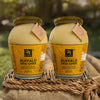
Buffalo Bilona A2 Desi Ghee: Understanding Quality and Tradition
When you reach for ghee in your kitchen, you're connecting with thousands of years of culinary tradition. But not all ghee is created equal.
24 KARAT Buffalo Bilona A2 Desi Ghee represents the intersection of ancient wisdom and uncompromising quality standards. This guide will help you understand what makes this traditional ghee distinctive—from its unique production method to its role in contemporary cooking.
What Makes 24 KARAT Buffalo Bilona A2 Ghee Different?
The Three Pillars of Authenticity
1. Buffalo Milk from Indigenous Breeds
Our ghee starts with milk from indigenous buffalo breeds in rural Rajasthan. These animals graze freely on natural pastures, producing milk with a naturally richer composition:
- Higher fat content: Buffalo milk contains 7-8% fat compared to 3-4% in cow milk
- Greater nutrient density: More calcium, magnesium, and phosphorus
- Distinctive flavor profile: Richer, deeper taste that many prefer for traditional cooking
- Natural creamy white color: Authentic buffalo ghee is white to pale yellow, not golden (which often indicates cow ghee or added colorants)
Unlike commercial operations that pool milk from multiple sources, we can trace our milk to specific herds and regions. This transparency matters—it's your assurance of quality from the very beginning.
2. A2 Protein: Why It Matters
You may have encountered the term "A2 milk" and wondered what it means.
Milk contains a protein called beta-casein, which comes in two main varieties: A1 and A2. Indigenous buffalo breeds and certain traditional cow breeds naturally produce only A2 beta-casein.
What's the difference?
- A2 beta-casein has a different amino acid structure than A1
- Many people find A2 milk easier to digest
- Traditional dairy animals produced primarily A2 milk for thousands of years
- Modern commercial dairy often contains A1 protein from hybrid breeds
Our buffalo naturally produce A2 milk—it's not something engineered or modified. It's simply the original form of milk that has nourished civilizations for millennia.
Note: While some people report better tolerance of A2 dairy, individual responses vary. If you have dairy allergies or sensitivities, consult your healthcare provider before trying any dairy product, including ghee.
3. Authentic Bilona Processing
This is where tradition and nutrition intersect most powerfully.
The Bilona method isn't a marketing term for us—it's our operational standard:
Our Complete Process:
- Whole milk collection: Fresh buffalo milk collected within hours of milking
- Single boiling: Gently heated once and cooled naturally to optimal temperature
- Fermentation: Cultured with natural starter for 8-12 hours, developing rich curd (dahi)
- Bilona churning: Traditional bi-directional wooden churning extracts cultured butter (makkhan)
- Slow cooking: Small batches cooked slowly over controlled flame until perfect clarification
- Hand filtering: Filtered through clean cotton cloth while warm
- Pure storage: Sealed in glass containers, protected from light and heat
What This Process Preserves:
Unlike industrial cream-separation methods, our complete Bilona process:
- Maintains the natural structure of milk fat compounds
- Develops complex flavor through fermentation
- Preserves heat-sensitive nutrients through controlled temperatures
- Creates the characteristic grainy texture of authentic ghee
- Results in a product that reflects traditional craftsmanship
→ Learn the complete science behind the Bilona process
The "24 KARAT" Standard: Our Quality Promise
The 24 KARAT name represents our commitment to purity—nothing added, nothing compromised.
What You Won't Find in Our Ghee
❌ No vegetable oils or vanaspati ❌ No artificial colors (authentic buffalo ghee is naturally white to pale yellow) ❌ No preservatives or additives ❌ No blending with cheaper fats ❌ No shortcuts in processing
What You Will Find
✓ Pure buffalo ghee: 17-20 liters of milk per liter of ghee ✓ Single-origin milk: Traceable to specific indigenous buffalo herds ✓ Traditional fermentation: Complete 8-12 hour culturing process ✓ Small-batch production: Artisan attention to every batch ✓ Natural variations: Slight differences between batches reflect authentic, non-industrialized production
We welcome your questions about our process. Transparency isn't just a value—it's how we build trust.
→ Test our ghee's purity at home using these 7 simple methods
Understanding the Nutritional Composition
Let's look at what buffalo Bilona ghee contains—not as health claims, but as factual nutritional information.
Fatty Acid Profile
Buffalo ghee consists primarily of:
Saturated fatty acids (60-65%): Including short-chain and medium-chain varieties
- Butyric acid: A short-chain fatty acid found in fermented dairy
- Capric and caprylic acids: Medium-chain fatty acids
- Palmitic and stearic acids: Long-chain saturated fats
Monounsaturated fatty acids (25-30%): Similar to those found in olive oil
Polyunsaturated fatty acids (3-5%): Including small amounts of omega-3 and omega-6
Fat-Soluble Vitamins
Quality ghee from well-fed animals contains:
- Vitamin A: Present as retinol in animal fats; buffalo convert beta-carotene efficiently
- Vitamin D: Naturally occurring in animal fats from sun-exposed, grazing animals
- Vitamin E: An antioxidant that protects fats from oxidation
- Vitamin K2: Found in fermented and animal products; involved in calcium metabolism
Important context: The vitamin content in ghee depends heavily on:
- What the animals eat (grass-fed vs. grain-fed)
- How much sunlight exposure they receive
- Processing method (traditional vs. industrial)
- Storage conditions (light and heat degrade vitamins)
Our free-grazing buffalo, processed using gentle Bilona methods, produce ghee that preserves these naturally occurring nutrients.
Conjugated Linoleic Acid (CLA)
CLA is a naturally occurring fatty acid found in dairy products from grass-fed ruminants. Buffalo milk from grazing animals contains meaningful amounts of CLA, which carries through to the ghee.
Important: While research explores various properties of CLA, we make no health claims about its effects. We simply note its presence as part of ghee's natural composition.
What Fermentation Adds
The 8-12 hour fermentation step in Bilona processing isn't just traditional—it's transformative:
- Develops complex flavor compounds not found in cream-based ghee
- Creates the characteristic aroma of cultured dairy
- Results in a different fatty acid profile compared to non-fermented processing
- Reduces lactose content (though not eliminated entirely)
This is why Bilona ghee tastes distinctly different from commercial ghee made directly from cream.
Cooking with 24 KARAT Buffalo Bilona Ghee
Beyond tradition and quality, ghee must perform in the kitchen. Here's where buffalo Bilona ghee excels.
The Smoke Point Advantage
Ghee's smoke point: approximately 250°C (482°F)
This is significantly higher than:
- Butter: 175°C (350°F)
- Coconut oil: 177°C (350°F)
- Extra virgin olive oil: 190°C (375°F)
- Most refined vegetable oils: 225-230°C (440-450°F)
Why this matters: When cooking oils exceed their smoke point, they begin to break down and oxidize, creating compounds with off-flavors and potentially harmful properties. Ghee's high smoke point makes it one of the most stable cooking fats available.
Best uses for high-heat cooking:
- Deep frying and shallow frying
- High-temperature sautéing
- Traditional tadka (tempering) technique
- Roasting vegetables at high heat
- Searing meats and proteins
Flavor Profile and Culinary Applications
Taste characteristics:
- Rich, nutty undertones from slow cooking
- Slightly sweet, cultured dairy notes
- Deep, complex aroma
- Clean finish without greasiness
Where buffalo ghee shines:
Traditional Indian Cooking:
- Dal tadka and tempering
- Paratha and roti
- Biryani and pulao
- Halwa and traditional sweets
- Drizzled over hot rice or khichdi
Contemporary Applications:
- Bulletproof coffee and golden milk
- Baking (substitute for butter at 1:1 ratio, or slightly less due to no water content)
- Finishing sauce for vegetables
- Popcorn seasoning
- Scrambled eggs and omelets
- Pan-searing fish and meats
Pro tip: For delicate applications where you want mild flavor, use ghee sparingly. For robust dishes where you want the ghee's character to shine through, be generous.
The Fat and Satiety Connection
One reason ghee has remained central to traditional diets is its satisfying nature.
Basic nutrition principle: Dietary fat contributes to feelings of fullness and satisfaction after meals. This is true of fats generally—not unique to ghee, but worth understanding.
How fat affects eating patterns:
- Fat slows gastric emptying, meaning food stays in your stomach longer
- Fat triggers the release of satiety hormones
- Fat provides concentrated energy (9 calories per gram)
- Fat enhances the absorption of fat-soluble vitamins from vegetables
In practical terms: A meal prepared with ghee—such as vegetables sautéed in ghee or rice finished with a spoonful—may help you feel satisfied with appropriate portions. This is a general property of including adequate fat in meals, not a specific therapeutic claim about ghee.
Important context: Total caloric intake and overall diet quality matter far more than any single ingredient. Ghee is calorically dense (approximately 120 calories per tablespoon), so portion awareness is sensible.
Storage and Shelf Life
Properly made ghee is remarkably stable—a testament to the wisdom of traditional preservation methods.
How to Store 24 KARAT Ghee
Room temperature storage (recommended):
- Keep in original glass container
- Store in cool, dry place away from direct sunlight
- Use clean, dry spoon every time (moisture causes spoilage)
- Shelf life: 12-18 months when properly stored
Refrigeration (optional):
- Refrigeration extends shelf life but isn't necessary
- Ghee will solidify when cold
- Allow to return to room temperature for easier scooping
- Texture will be harder and more crystalline when cold
Signs of proper storage:
- Ghee remains golden (cow) or creamy white (buffalo)
- Pleasant nutty aroma continues
- No off-smells or rancid odors
- Texture remains consistent
Signs of spoilage:
- Sour or rancid smell
- Mold growth (indicates moisture contamination)
- Unusual discoloration
- Off-taste
Properly made Bilona ghee, stored correctly, remains fresh and nutritious for over a year without refrigeration—one of its most practical advantages.
The Economics of Quality: Understanding Price
Let's be direct about pricing, because transparency matters.
Why Authentic Bilona Ghee Costs More
The math:
- 17-20 liters of buffalo milk → 1 liter of ghee
- Buffalo milk costs more than cow milk
- Traditional processing is time-intensive (24-48 hours from milk to ghee)
- Small-batch production means higher per-unit costs
- No dilution or adulteration to increase margins
Commercial ghee comparison:
- 15-18 liters of milk → 1 liter of ghee (cream separation is more efficient)
- Fast processing (2-4 hours)
- Industrial scale reduces costs
- May involve pooled milk from unknown sources
- Often adulterated to reduce costs further
Price reality check:
| Product Type | Approximate Market Rate (per liter) |
|---|---|
| Commercial buffalo ghee | ₹400-600 |
| Authentic Bilona buffalo ghee | ₹800-1,500+ |
| A2 Buffalo Bilona ghee | ₹1,200-2,000+ |
If someone offers "Bilona ghee" significantly below these ranges, ask questions. The input costs alone don't support rock-bottom pricing.
What you're paying for:
- Higher milk input requirement
- Traditional processing time and expertise
- Small-batch quality control
- Nutritional preservation through gentle methods
- Transparency and traceability
- Zero adulteration or shortcuts
We price our ghee to reflect its actual cost of production while remaining accessible to families who value quality. We don't apologize for our pricing—we explain it.
Who Chooses 24 KARAT Ghee?
Our customers share common values, even if their specific needs differ.
You might choose our ghee if you:
- Value knowing exactly where your food comes from
- Appreciate traditional food preparation methods
- Notice the difference between authentic and commercial products
- Cook traditional Indian recipes that deserve authentic ghee
- Want stable, high-quality fat for daily cooking
- Prefer supporting transparent, traceable food systems
- Seek products without additives or shortcuts
You might look elsewhere if you:
- Prioritize lowest possible price above all other factors
- Don't notice or care about differences in ghee quality
- Prefer modern, industrially-standardized products
- Want something "fortified" with added vitamins or supplements
We're not for everyone. We're for people who care about the details that make real food different.
Common Questions About Buffalo A2 Bilona Ghee
Is buffalo ghee different from cow ghee?
Yes, in several ways:
Composition: Buffalo milk has higher fat content (7-8% vs 3-4%), resulting in richer ghee with more fat-soluble nutrients per serving.
Color: Buffalo ghee is naturally creamy white to pale yellow. Cow ghee is golden yellow due to beta-carotene. If buffalo ghee appears golden, question its authenticity.
Flavor: Buffalo ghee has a deeper, richer taste that many prefer for traditional recipes.
Cooking properties: Both have high smoke points, but buffalo ghee's higher saturated fat ratio provides slightly more heat stability.
Neither is universally "better"—it's about preference and intended use.
→ Complete comparison: Buffalo vs Cow ghee
Can people with lactose intolerance consume ghee?
The Bilona process reduces lactose content significantly:
- Fermentation: Bacterial cultures consume lactose during the 8-12 hour culturing process
- Clarification: Milk solids (which contain remaining lactose) are removed during slow cooking
- Filtering: Final filtering removes any trace milk solids
Result: Properly made Bilona ghee contains minimal lactose—often tolerated by those with lactose intolerance (not to be confused with dairy allergy).
However: Individual tolerance varies. If you have severe lactose intolerance or dairy allergy, consult your healthcare provider before trying ghee.
How do I know if ghee is really Bilona-made?
Ask the producer these specific questions:
-
"Do you ferment whole milk into curd before churning?"
- Bilona: Yes (8-12 hours)
- Commercial: No (uses cream directly)
-
"What churning method do you use?"
- Bilona: Wooden bilona (hand or motor-powered, bi-directional)
- Commercial: Industrial cream separators
-
"How much milk per liter of ghee?"
- Bilona: 17-20 liters
- Commercial: 15-18 liters
-
"Where do you source your milk?"
- Authentic brands can name specific regions or herds
- Vague answers are red flags
If producers can't or won't answer these questions, their "Bilona" claim is questionable.
→ Test ghee purity at home: 7 simple methods
Does ghee need to be refrigerated?
No. Properly made ghee is shelf-stable at room temperature.
Why: The clarification process removes water and milk solids—the components that spoil. Pure fat, properly stored, doesn't require refrigeration.
Storage requirements:
- Cool, dry location
- Protected from direct sunlight
- Sealed container
- Clean, dry spoon for every use
Refrigeration is optional and won't harm the ghee, but it will make it very hard and difficult to scoop.
What's the best way to use ghee daily?
For everyday cooking:
- Use as your primary cooking fat for sautéing, frying, and roasting
- Add a spoonful to dal or rice just before serving
- Spread on warm roti or paratha
- Use in place of butter in most recipes
Suggested daily amount: For healthy adults, 1-3 teaspoons (5-15 grams) daily is commonly suggested by nutrition professionals familiar with traditional fats. This provides culinary and nutritional benefit without excessive calories.
Important: Consider your overall caloric needs and diet. Ghee is concentrated energy—use it to replace other fats, not in addition to them.
Beyond the Kitchen: Ghee in Traditional Practices
Ghee's role extends beyond cooking in Indian tradition.
Traditional uses (informational only—we make no therapeutic claims):
- Ayurvedic practices: Ghee has been used in Ayurveda for thousands of years in various applications
- Ceremonial uses: Ghee lamps (diyas) in religious ceremonies
- Seasonal eating: Traditional patterns varied ghee consumption by season
- Cultural significance: Offered to guests as a symbol of hospitality and respect
Our perspective: We produce ghee for culinary use. Traditional and cultural practices reflect ghee's historical importance, but we defer to appropriate practitioners for guidance on non-culinary applications.
Our Commitment to You
24 KARAT Manthan isn't just a brand—it's a promise.
We commit to:
✓ Complete transparency: Every question answered honestly ✓ Consistent quality: Every batch meets our standards or doesn't get packaged ✓ No shortcuts: Traditional method, every time ✓ Zero adulteration: Nothing added, nothing compromised ✓ Traceable sourcing: We know exactly where our milk comes from ✓ Honest communication: No exaggerated claims or misleading marketing
You can expect:
- Natural batch-to-batch variation (real food varies; industrial products don't)
- Dense, grainy texture (not artificially smooth)
- Rich, authentic aroma (not bland or perfumed)
- Natural buffalo ghee color (creamy white, not golden)
- Straightforward answers to your questions
The Choice Is Yours
In a market flooded with products claiming to be "pure," "traditional," and "authentic," choosing real ghee requires knowledge.
Now you have that knowledge.
You understand:
- What makes buffalo A2 milk distinctive
- Why the Bilona process preserves nutrition
- How to identify authentic ghee
- What to expect from quality ghee
- Why pricing reflects real production costs
Whether you choose 24 KARAT or another authentic producer, you now have the tools to make an informed decision.
But if you value transparency, tradition, and uncompromising quality—we'd be honored to serve your family.
Experience Authentic Buffalo Bilona Ghee
One taste will tell you more than any article can convey.
The texture. The aroma. The flavor. The way it transforms simple dal or rice into something memorable.
This is what ghee was meant to be.
→ Shop Our Buffalo Bilona Ghee Collection
→ Try Our Bestselling 1 Litre Buffalo Bilona Ghee
→ Learn More: Complete Guide to Buffalo Bilona Desi Ghee
Have Questions?
We welcome your questions about our ghee, our process, or how to use ghee in your kitchen.
Contact us or explore our other educational resources:
- How to Test Ghee Purity at Home: 7 Simple Methods
- Is Ghee Healthy? Separating Myth from Science
- The Bilona Process: Why This Ancient Method Preserves More Nutrition
Disclaimer: The information in this article is for educational purposes only and is not intended as medical or nutritional advice. Individual dietary needs vary. If you have specific health concerns or dietary restrictions, consult with a qualified healthcare provider or registered dietitian before making significant dietary changes.